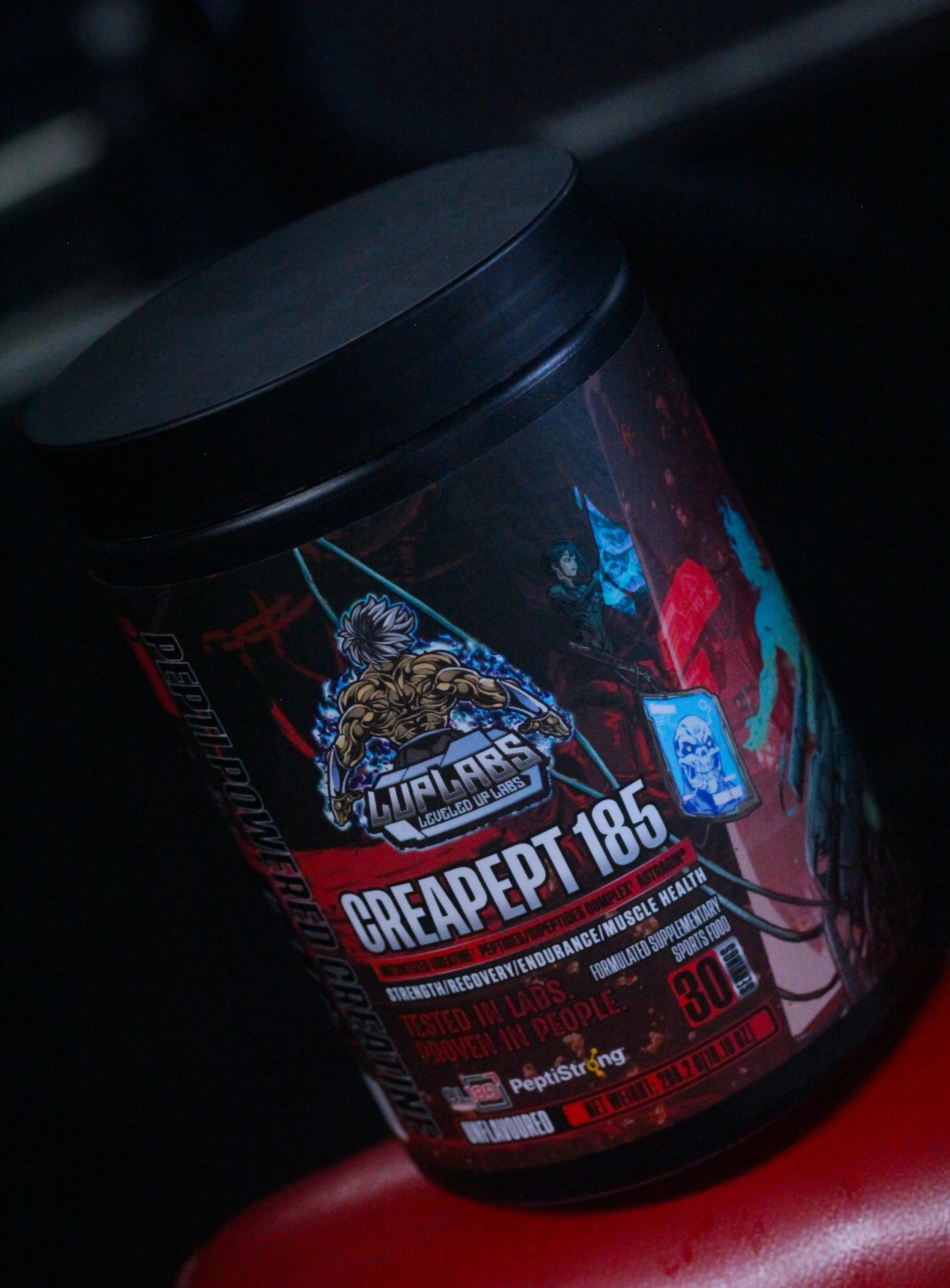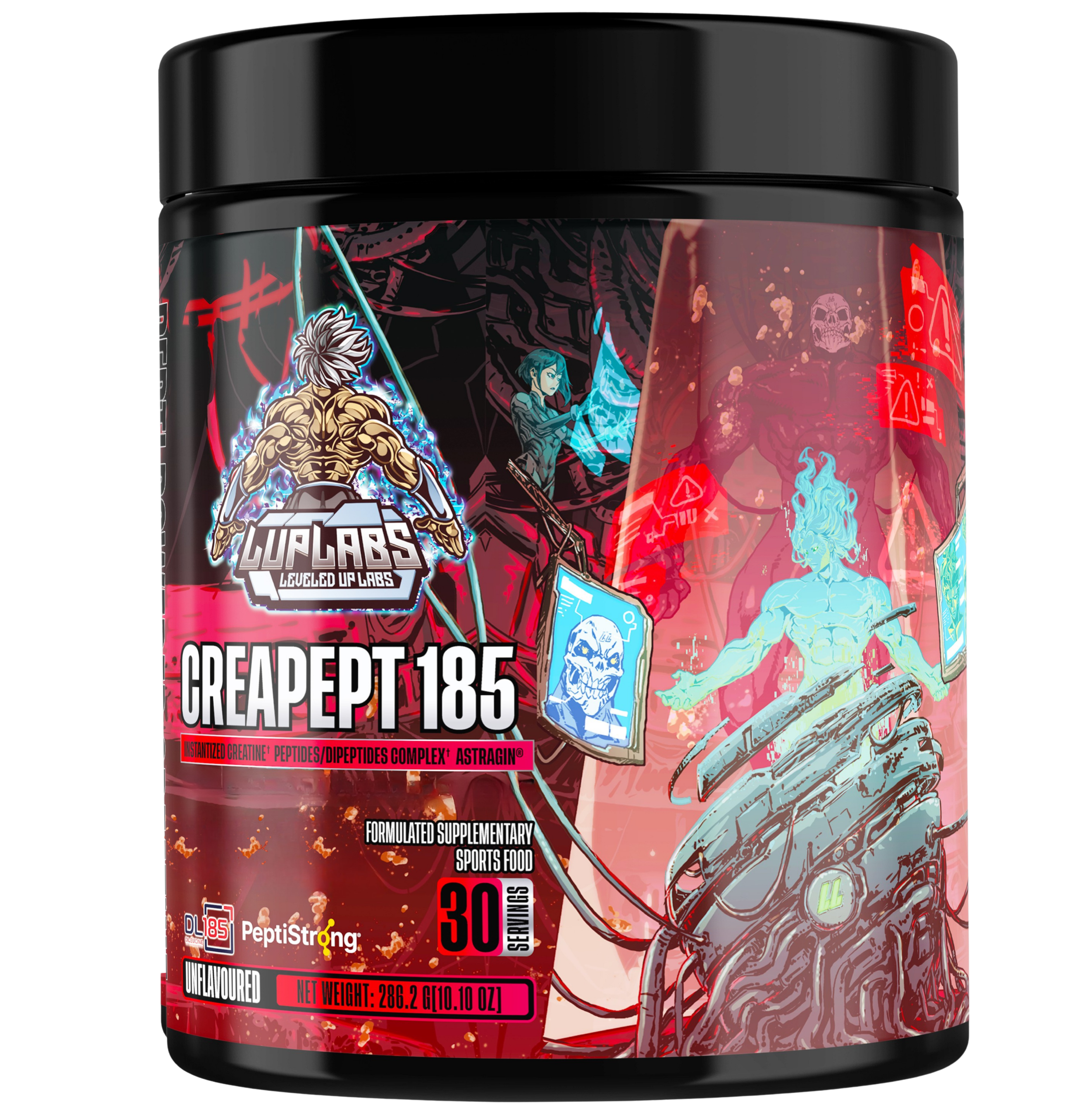
How to Use CREAPEPT 185 Optimally
Suggested Use:
Take 1 light scoop daily. A light, gently rounded scoop is sufficient. Sight variation in scoop size is normal due to powder density.
Timing Options
Pre-Workout
Take ~45 minutes before training with water.
Intra-Workout
May be used during training, including alongside ANDROSIA RE.
Post-Workout
Take immediately after training, then wait 20–30 minutes before consuming a protein shake or meal.
Rest Days / Convenience
Take first thing in the morning on an empty stomach.
CREAPEPT 185® does not replace dietary protein.
Protein supplies the building blocks for muscle, while CREAPEPT 185® is designed to support anabolic signalling.
What Is CREAPEPT 185?
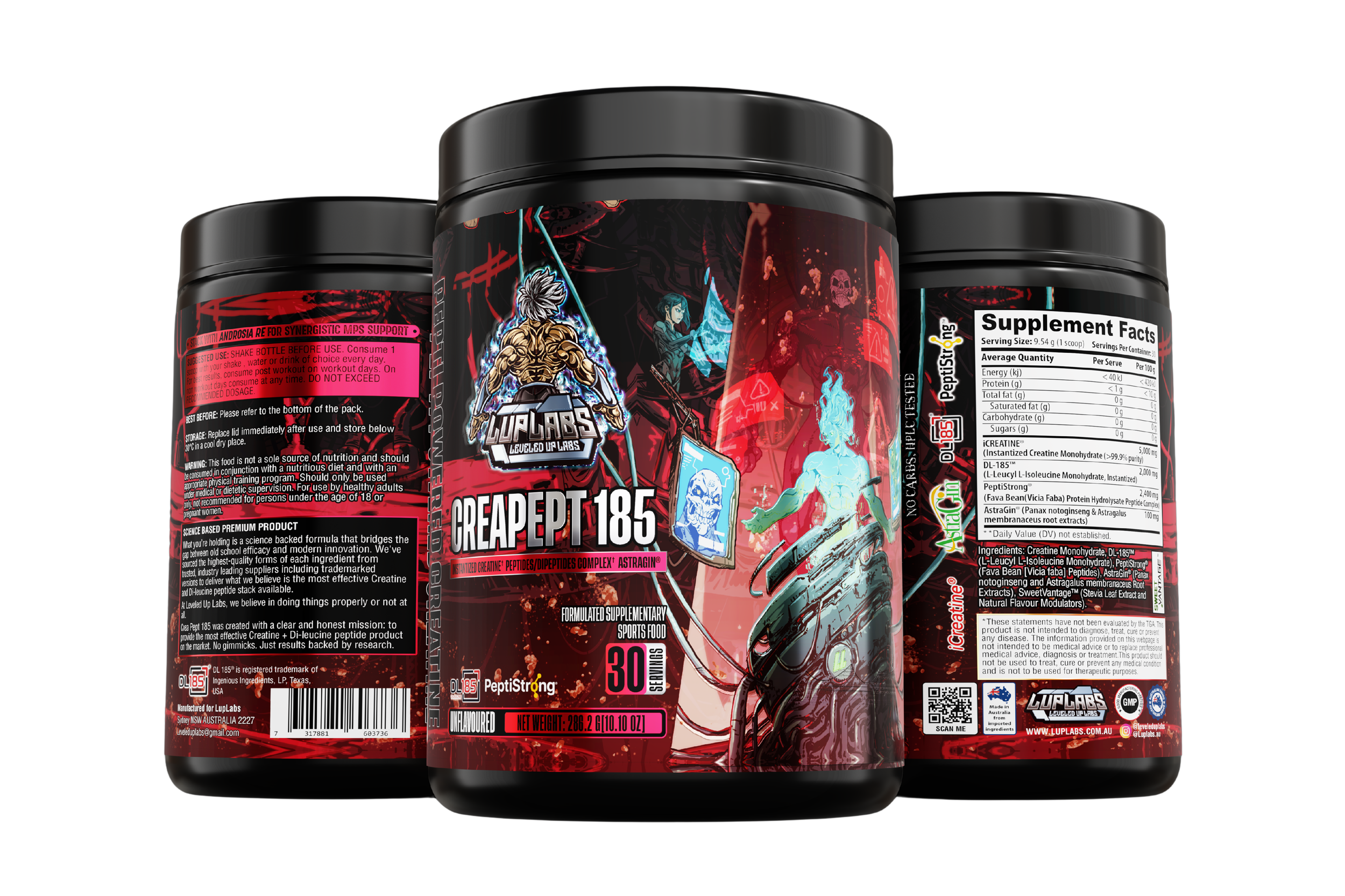
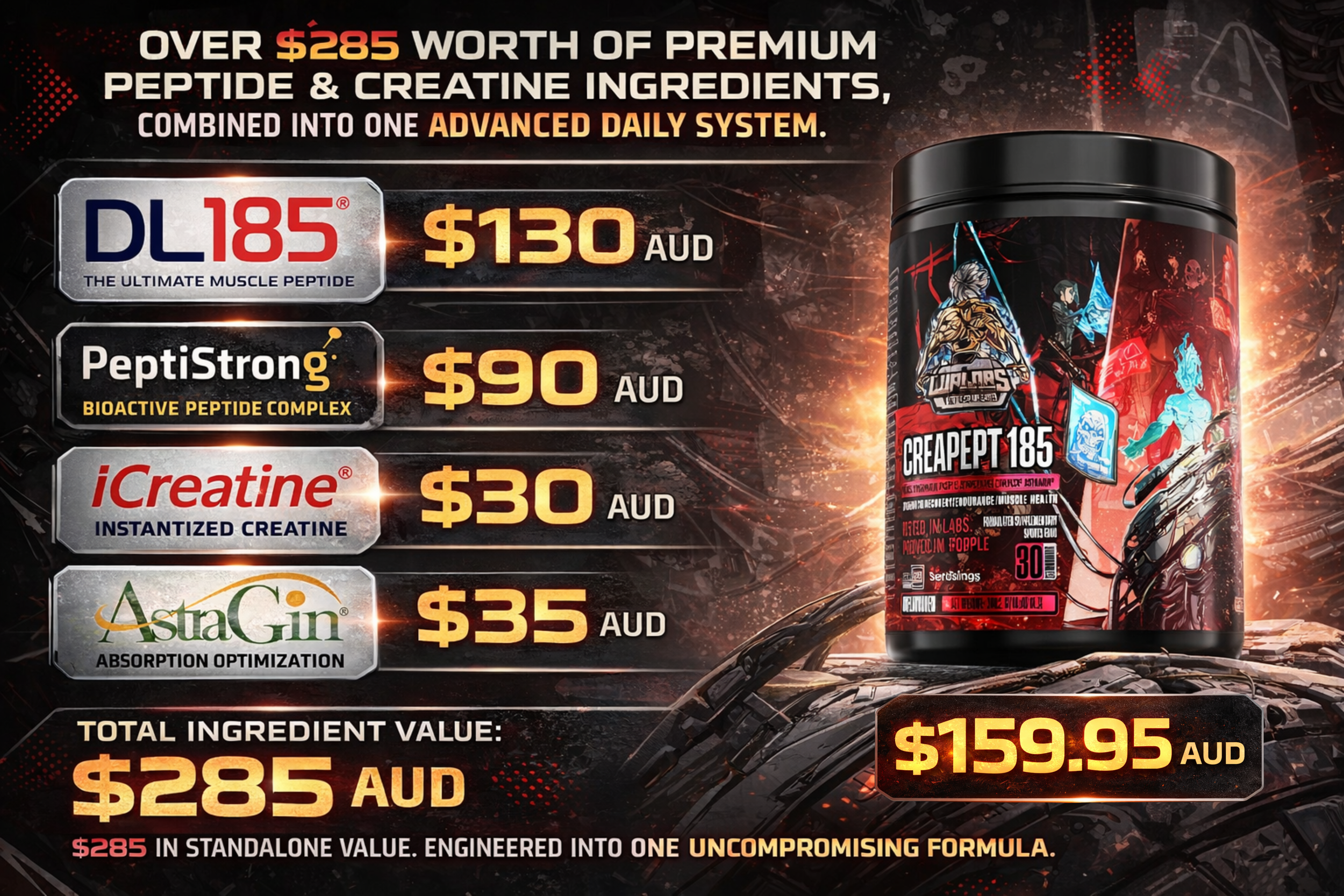
CREAPEPT 185 combines instantized high-purity creatine, advanced peptide complexes, and formulation support ingredients into one cohesive system. Based on equivalent raw-material sourcing, the formulation represents over $250 AUD compared to purchasing the ingredients separately.
It combines four complementary components that are designed to work together when used around workouts, supporting performance, training output and recovery as part of a structured nutrition and training program.
Think of it as a targeted performance signal, used alongside adequate protein and calories.
The CREAPEPT 185 System
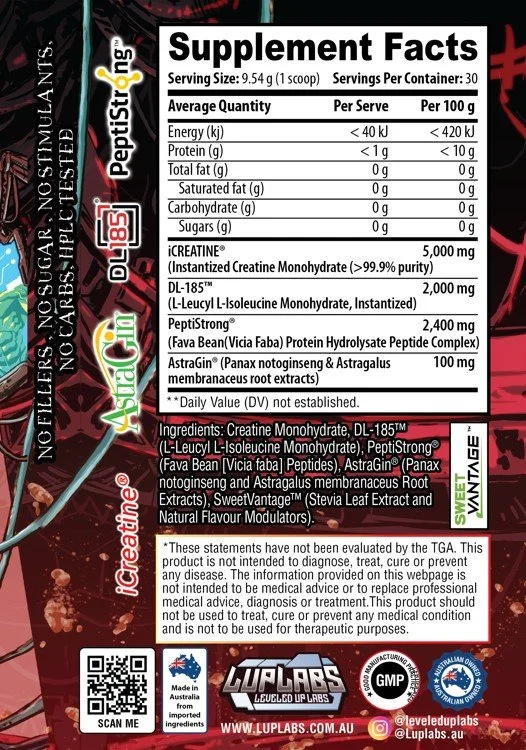
iCreatine™ (Instantized Creatine Monohydrate, ≥99.9% Purity)
iCreatine™ is a patented, instantized form of creatine monohydrate — one of the most extensively researched ingredients in sports nutrition. Creatine is naturally present in the body and plays a role in rapid energy availability during short, high-intensity efforts such as resistance training, sprinting, and repeated sets.
The instantized format is designed to improve mixability and dispersion in liquid compared to standard creatine powders. This finer dispersion is often preferred by users who find instantized creatine easier to consume, better mouthfeel and gentler on the stomach as part of their training routine. iCreatine™ is manufactured to high analytical purity specifications (≥99.9%), reflecting strict raw-material quality control and consistency.
Key Benefits:
Training Performance Support: Commonly used to support strength, power output, and high-intensity exercise performance when combined with resistance training.
Repeat-Effort Capacity: Widely utilised in sports nutrition for supporting repeated bouts of intense exercise.
High Purity Standard: Tested to ≥99.9% purity using validated laboratory methods, valued for consistency and low impurity profile.
Instantized for Mixability & Comfort: Designed for improved dispersion in liquid, which many users find easier to consume compared to non-instantized creatine sources.
iCreatine™ is designed for athletes who value precision, quality, consistency, and day-to-day usability in their performance nutrition.
DL185™ (Di-Leucine Peptide)
DL185™ is a dipeptide form of leucine, created by bonding two L-Leucine molecules together. Leucine is a well-studied amino acid involved in pathways related to muscle protein synthesis and training adaptation.
Peptide-bound amino acids utilise different transport mechanisms compared to free-form amino acids and have been explored in sports nutrition research for their role in targeted use around training. DL185™ is designed to complement protein and essential amino acid intake, not replace it.
Dileucine and other peptide-bound amino acids have been examined in peer-reviewed human research to better understand how they differ from free-form amino acids in digestion, circulation, and muscle protein turnover.
Controlled studies have investigated dileucine ingestion in resistance-training settings, examining outcomes such as muscle protein turnover markers and performance-related measures when compared with free leucine or placebo under research conditions. These investigations contribute to ongoing scientific discussion around why peptide-based amino acids are of interest within advanced sports nutrition strategies.
Together, this body of literature informs continued research and interest in dipeptide amino acids when used alongside resistance training and adequate protein intake.
Key Benefits
Peptide-Bound Leucine Format: Utilises peptide transport pathways rather than free-form amino acid delivery.
Training-Focused Use: Commonly positioned for use around workouts alongside protein or EAAs.
Research-Informed Design: Aligned with published human research exploring dileucine and peptide-based amino acids.
Advanced Nutrition Strategy: Studied as part of broader approaches to performance-focused amino acid intake.
DL185™ is intended for athletes looking to go beyond basic amino acid supplementation and integrate next-generation peptide formats into their training nutrition.
PeptiStrong™ (Fava Bean Peptide Complex)
PeptiStrong™ is a patented peptide complex derived from fava bean (Vicia faba) protein through a controlled hydrolysis process. Rather than functioning as a traditional intact protein, PeptiStrong™ consists of specific peptide fractions that have been identified and studied for their interaction with muscle tissue in the context of resistance training. Bioactive peptides represent a growing area of interest in sports nutrition research. Unlike whole proteins, which primarily serve as sources of amino acids, peptide complexes are investigated for how their structure may influence signalling, muscle maintenance, and recovery-related processes when used alongside adequate protein intake and structured training. PeptiStrong™ reflects this emerging category of precision plant-based peptide technology, developed using computational peptide discovery and validated through human research.
PeptiStrong™ has been examined in multiple human studies investigating muscle maintenance, recovery, and adaptation during resistance training and physically demanding conditions. Research into fava bean–derived peptide networks has explored how these peptides behave differently from intact proteins, focusing on outcomes related to muscle function, recovery, and training resilience. Published, placebo-controlled trials have examined fava bean peptide hydrolysates in resistance-trained and recreationally active populations, comparing them with placebo or protein controls under controlled conditions. These studies contribute to scientific discussion around the role of bioactive peptides in supporting muscle tissue during periods of training stress, recovery, and adaptation. Industry discussions and independent analysis, including commentary from sports nutrition analysts and ingredient researchers, have highlighted PeptiStrong™ as an example of how AI-discovered peptide fractions are being translated into real-world performance nutrition applications. Rather than replacing dietary protein, peptide complexes like PeptiStrong™ are studied as complementary ingredients within advanced formulations.
Key Benefits
Peptide-Based Protein Technology: Derived from fava bean protein and processed into targeted peptide fractions rather than intact protein.
Muscle Maintenance Support: Studied in the context of supporting muscle tissue during resistance training and recovery phases.
Recovery-Focused Nutrition: Commonly discussed in research exploring post-exercise recovery, training resilience, and muscle function.
Complementary Use: Designed to work alongside adequate daily protein intake, not as a standalone protein replacement.
PeptiStrong™ is intended for athletes and active individuals looking to incorporate research-driven peptide technology into a structured training and nutrition program.
AstraGin® (Astragalus membranaceus & Panax notoginseng Extract)
AstraGin® is a patented blend of botanical extracts derived from Astragalus membranaceus and Panax notoginseng, developed to support nutrient utilisation in sports nutrition formulations. It is widely used in premium products that contain amino acids, creatine, and peptide-based ingredients. Rather than acting as a direct performance ingredient, AstraGin® functions as a support component, helping nutrients work together more efficiently as part of normal digestive and absorptive processes. Research on AstraGin® and its constituent botanicals has explored how these compounds may influence intestinal transport activity and nutrient handling, which is why AstraGin® is commonly included in formulations designed to support the uptake and utilisation of ingredients such as amino acids and creatine.
Key Benefits
Nutrient Utilisation Support: Commonly included to complement amino acids, creatine, and peptide-based ingredients in complex formulations. Research-Supported Inclusion: Investigated in published research examining nutrient transport and utilisation pathways, informing its use as an absorption-support ingredient in sports nutrition. Formulation Synergy: Designed to support how multi-ingredient formulas work together as part of normal digestive processes. Supporting Role: Intended to complement performance-focused ingredients rather than act as a primary active component. AstraGin® plays a supporting role in advanced sports nutrition stacks where ingredient synergy, formulation efficiency, and evidence-informed design are prioritised.
How to Use CREAPEPT 185 in Your Training
CREAPEPT 185 is designed to be used alongside sufficient protein intake, not as a replacement.
When combined with:
Adequate daily protein
Structured resistance training
Proper recovery
CREAPEPT 185 provides a performance-focused support stack that fits seamlessly into a high-level training routine.
References
Uchiyama, S., et al. (2019). Effects of a botanical extract blend on intestinal transporter activity and nutrient uptake. Journal of Functional Foods, 54, 172–179. Li, Y., et al. (2018). Botanical extracts from Astragalus membranaceus and Panax notoginseng and their role in nutrient utilisation pathways. Phytotherapy Research, 32(4), 672–679. Nuritas / NuLiv Science. AstraGin®: Botanical compounds and nutrient utilisation in sports nutrition formulations. Ingredient research summaries and published data referenced in academic and industry literature. PricePlow. AstraGin®: Absorption Support in Performance Nutrition. https://blog.priceplow.com/supplement-research/astragin Hagele, Anthony M., et al.
Dileucine ingestion, but not leucine, increases lower body strength and performance following resistance training: A double-blind, randomized, placebo-controlled trial.
PLOS ONE, vol. 19, no. 12, 2024, e0312997.
https://journals.plos.org/plosone/article?id=10.1371/journal.pone.0312997 Hagele, Anthony, et al.
Effects of 10 weeks of dileucine supplementation on athletic performance.
Journal of the International Society of Sports Nutrition, vol. 20, Suppl 2, 2023.
https://www.ncbi.nlm.nih.gov/pmc/articles/PMC10388812/ Paulussen, Kevin J. M., et al.
Dileucine ingestion is more effective than leucine in stimulating muscle protein turnover in young males: A double-blind randomized controlled trial.
Journal of Applied Physiology, vol. 131, no. 3, 2021, pp. 1111–1122.
https://journals.physiology.org/doi/full/10.1152/japplphysiol.00295.2021 Morifuji, Masashi, et al.
Comparison of different sources and degrees of hydrolysis of dietary protein: Effect on plasma amino acids, dipeptides, and insulin responses in human subjects.
Journal of Agricultural and Food Chemistry, vol. 58, no. 15, 2010, pp. 8788–8797.
https://pubmed.ncbi.nlm.nih.gov/20614926/ Kerr, A., et al. (2023).
Improved strength recovery and reduced fatigue with suppressed plasma myostatin following supplementation of a Vicia faba hydrolysate in a healthy male population.
Nutrients, 15(3), 613.
https://pubmed.ncbi.nlm.nih.gov/36839344/ Weijzen, M. E. G., et al. (2023).
Vicia faba peptide network supplementation does not differ from milk protein in modulating changes in muscle size during short-term immobilization and subsequent remobilization but increases muscle protein synthesis rates during remobilization in healthy young men.
The Journal of Nutrition, 153(7), 2143–2153.
https://pubmed.ncbi.nlm.nih.gov/37277162/ Nuritas Ltd.
PeptiStrong™: AI-discovered bioactive peptides from fava bean for muscle health.
Ingredient research summaries and human clinical investigations presented in sports nutrition literature and industry analysis. PricePlow.